
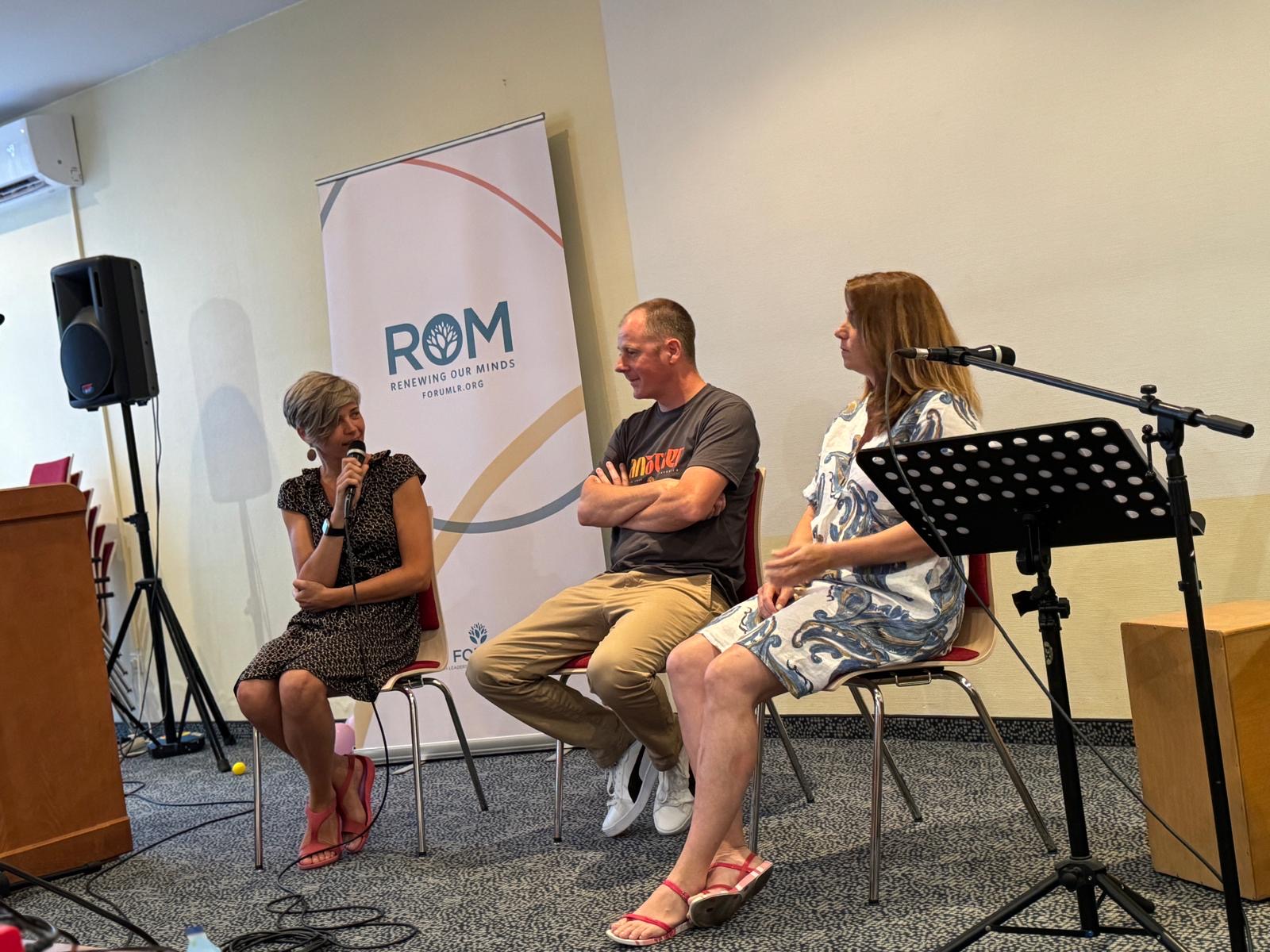
During empathy night I could have shared. But initially Conrad was supposed to do so. His perspective. His take on infertility & adoption. We need more male perspectives on this topic. I was glad he offered. That morning I was invited to facilitate the evening sharing. I was glad to do it. But that put it out of my mind that I could share my othering perspective. We missed on purpose all the chances, from the moment we all introduced ourselves that first night. But we committed to this new way for this shorter event. And the experiment was revealing.
We didn’t do small groups and we allowed our story to fade in the background and be revealed slowly only as needed, occasionally.
I carry no burden, no guilt of othering. Or being othered. But this conference experience stopped me to truly reflect on my blind spots. I was challenged with great questions & philosophical reflections.
The margins game was perfectly fit to help us feel viscerally what it is like to exclude and be excluded. And the reality that we may exclude others more than we’ve even been excluded. Conrad believed we needed to talk about how we self sabotage our own inclusion or belonging. It easy to project on others what we feel frustrated with, but with humility, if we acknowledge our own bias, hardness, fears… we may realize we “other” ourselves.
As a woman, I didn’t feel l lost much and I acted accordingly everywhere I went. I don’t asume rejection or exclusion. If somewhere I’m not welcomed, I dust off my shoes and move on. No regrets. I don’t insist to be truly seen.
When we couldn’t have kids I felt a sting of not belonging to a group I wanted to be a part of. Not because I had friends there. I felt it was a chapter I wanted to experience the challenge of growth, the mess & beauty of parenting.
But the journey of accepting my pain, my wait, my being irreversibly different, that defined the depth of my identity in the most extraordinary way.
I like to mention our different status, our adoption story, because I arrived here by choice, and my children are my delight, in a way that the world doesn’t understands and often times dismisses. I want to gift them a new perspective. That is why i bring it up.
My strong belief and ease regarding this topic helped my kids be at ease with the subject, and their identity clear, complex, defined. They are valuable, beautiful, independent from me. Extraordinary in their own right. But a pang of worry lingers about how their adoption might cause them to be othered. Not by kids but by adults.
So I weigh my options, the audience, the age of my kids, I check in with them, and I still talk about adoption but I filter my words more. I think they still feel my confidence & my protection. But they will have to forge their own path soon enough.
As a mom, an adoptive mom, my heart aches at the thought that my kids could be unfairly excluded & hurt. I brought up early with both my daughters the possibility of people not understanding what it means to be adopted, and “other” them.
How can you bring this up in social contexts without passing onto them the responsibility of worry & care? I want each of us to own our own identity & make character and drive, intelligence & kindness, things we can work on, improve, be more important than our origins.
The girls believe their story is cool, it makes them more interesting, it gives them depth & color, strength & possibilities to become.
How can we “other” kids? What about human dignity & worth? What about adoption make an adult fear the becoming of a kid?
I mean I don’t expect anything but deference & respect, a minimum of distance if one can’t express kindness. I care not for judgement and assumptions.
Not for me. But I get defensive as a mom. Even when it is not my personality. I stop to reflect on this gut reaction. I filter it but I see a pattern of fighting for social justice. I would take any exclusion. But absurd othering is painful and all I can do is prepare my kids for the possible reality of the ignorant world, affirm their value, help them learn tools to cope, to overcome. To maybe stand up for others if the situation demands it.
This is my perspective of othering. Limited or specific in ways it doesn’t overlap with others experiences. But hopefully this would help others see my perspective, a different perspective.