
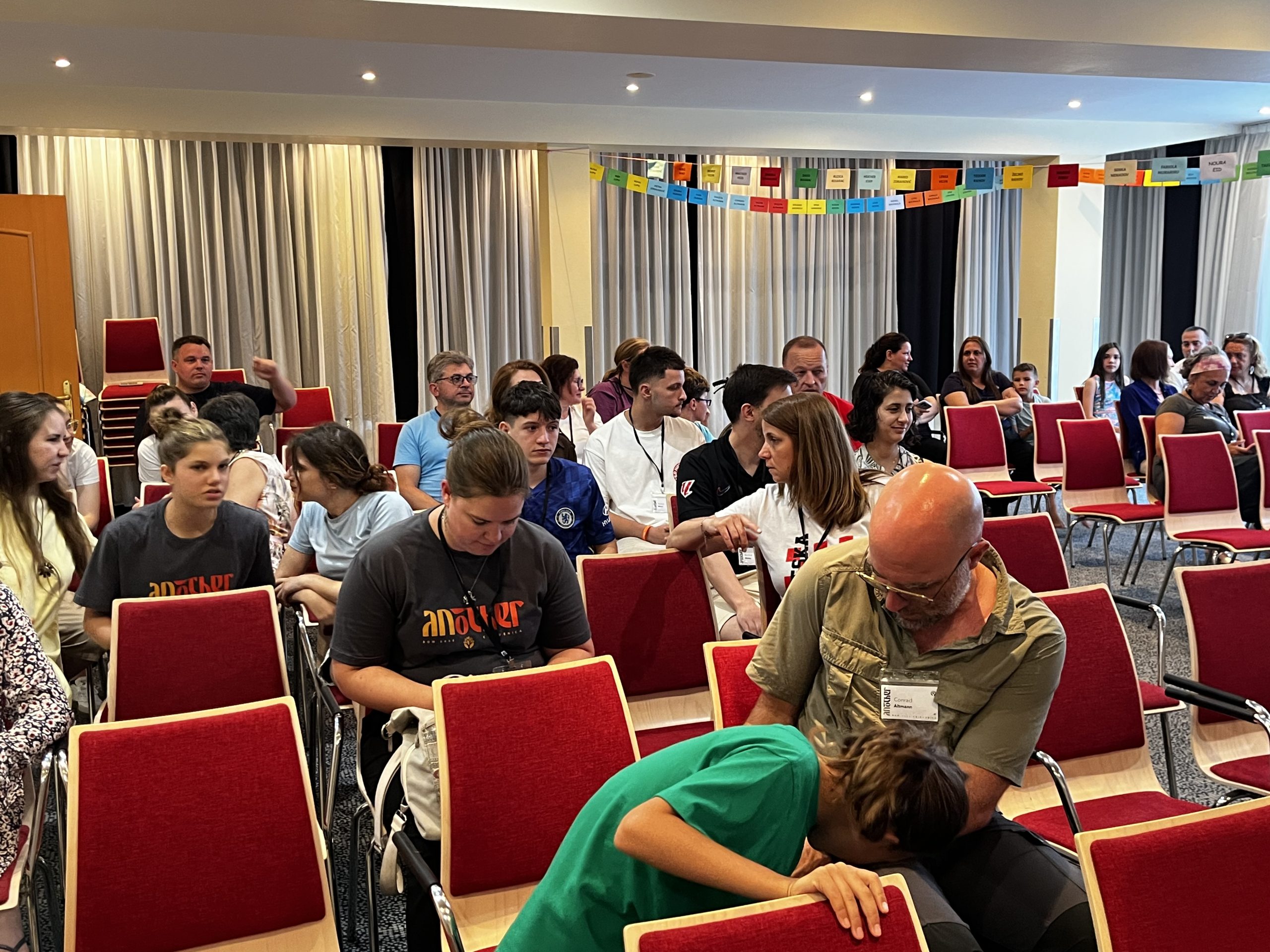
Before I know my audience closely, I like to take to the stage and make myself known. When I focus too much on the individual eyes in the crowd, I get distracted. I am afraid I would filter too much of myself – or I would have to make a conscious effort to stay on track.
I was offered the opportunity to set expectations at the beginning of the conference. I loved the thought of it, though as I was busy leading up to the event, I couldn’t polish my thought. And I started getting nervous in anticipation. It is not good to cram information last minute. I like to immerse myself in what I will say, prepare, and then put it aside until it’s time.
I prepared a few speaking cards, to stay on track. I read them a few times. Practiced once in front of the camera. And then I jumped in at the deep end. The first night is always chaotic. It’s hard to switch gears. I like to speak to a quiet room. Engage with a crowd that listens. For that reason, it was good to have the cards, because connecting with such a diverse group, as well as staying on track, it tales a lot of energy.
I started with a personal story. Just to catch their attention. And it worked. I believe the room connected with me and remembered my words, or at least how I made them feel.
I started by saying that I have a pretty good relationship with my mother in law. I married her son just a few months after I met him. And I reached out to her to introduce myself as soon as I started dating him. We got married quite quickly and then we both moved to California. Where we lived with them for a few months.
Those first years we traveled together the four of us, we organized conferences together, vacationed together, and borrowed money from them, then paid them back. We cooked together & cleaned the house together.
I credit our good relationship on a pivotal point early in our friendship. She said this: “unspoken expectations are preplanned resentment”
So let’s set clear guidelines for engaging in conversations with high potential of disagreement.
As attendees of this conference, let’s agree to the following principles and practices as a way to help everyone feel both safe and brave enough to speak openly and honestly. These principles are reminders of behavior, not hard rules, to help us all make more space for each other. The ultimate purpose of these principles is to help us build authentic relationships.
Be 100% Present – Set aside the usual distractions of things undone and things to do. Bring all of yourself to this small group. We will all learn most effectively if we are present to one another.
Maintain Confidentiality – Create a safe space by respecting the confidential nature and content of discussions in the small group. Do not share stories or personal disclosures without permission, so that the small group is both enriching and safe.
Invite Everyone to the Conversation – Small groups make space for everyone. More talkative individuals allow time for others to speak, and quieter members are welcome to share and given space to do so. Say what is in your heart, trusting that your voice will be heard, even if it is different from what another has said. Own your opinion by speaking for yourself, using “I” statements.
Listen to Understand – Authentic relationships are guided by curiosity, not fear. Pause to examine assumptions and suspend judgment when others have insights or experiences that challenge us. Although agreement is optional, listen to discover new perspectives and possibilities.
Acknowledge Hurts & Find the Positive Core – People are motivated by what they believe, even when they appear skeptical, critical, or hurtful. Be ready to acknowledge when words have a harmful impact. Embrace the uncomfortable moments to dig deeper and find the positive core.
Respect Differences – we are created uniquely different from one another, which helps us recognize blind spots and grow. Rather than belittling or excluding questions and differences, help everyone feel safe and included. Communicate honestly, openly, and humbly—without cynicism or a supposed
sense of superiority. Recognize the value of diverse opinions and that unity does not require unanimity.
Expect “Non-Closure” – Stay in the present. We won’t get to the end of the conversation today. This small group is intended as a launching pad to begin your longer learning journey of learning.
Normalize “I don’t know” – We don’t have to have an opinion about everything. Admitting we don’t know prepares us to open our mind to discover new possibilities, and invites others to the conversation.
And throughout the week, if we are to assume anything, let’s assume positive intent.