
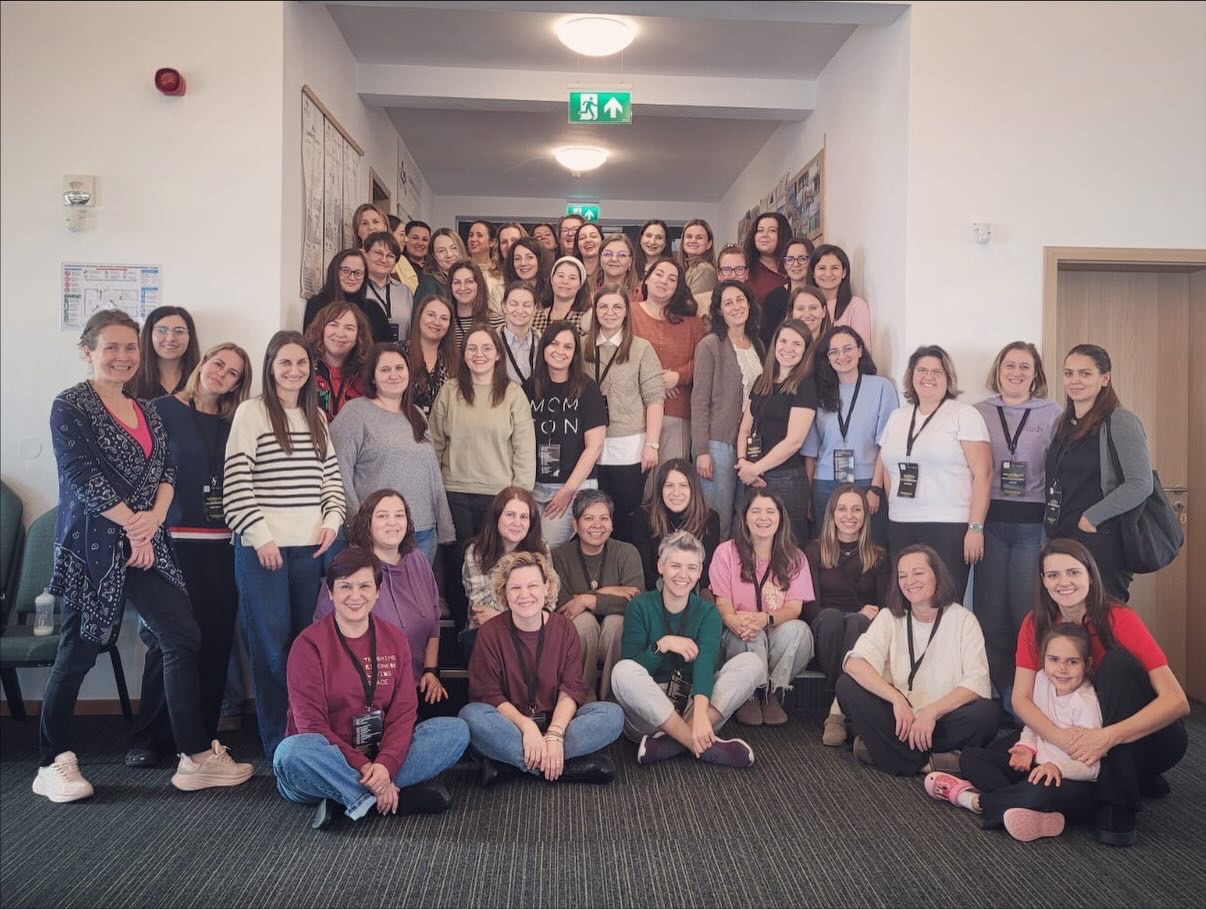
There is a certain degree of joy and rest in the familiar. We returned to Păltiniș in the fall, with many of the MomCo leaders. We learn alongside those who are growing in their leadership roles, and there is room in the ministry team for fresh forces and new or young mothers with diverse life experiences.
Nadia’s vision is to cover key areas in which we can grow, both spiritually and practically in developing our leadership skills. I love how we turn our gaze to Jesus, and lean into the Word. Otherwise there would be room for too much talk that fills our ears but leaves us with empty hearts and hungry souls.
We had one day with the Volunteers and Cristina Apolinario (from the MomCo staff) joined us from Munich. We picked her up from the airport and we got to visit the Christmas market that had just opened downtown Sibiu. What a wonderful way to connect before all the hustle and bustle of a conference. Before everyone else arrived she also shared with us (MVT) the structure of MomCo, the roles in this org and the importance of thinking of succession. In essence: training our replacements. It reminded me of something a top leader in the company I worked for in Silicon Valley: “the most important responsibility of a leader is training their replacement.” It seemed a bit extreme then, but as I have led many groups, I realize that if we lead well, thinking of succession is part of a successful life. We lead well if we organically empower those around us to live full lives even when we are not there anymore.
After all the moms arrived, Maura opened the program on that first evening and spoke to us about how important it is to know our Master. Yes, He is Lord and Savior, beloved and heavenly Bridegroom, but His authority under which we rest and who guides us, must be recognized and known. He is the Master. And we cannot speak to others about Him if we do not know Him.
Maura walked delicately but spoke with power. She assumed that her words might fall hard, but she did not dilute the Word. She firmly stated that we need to be disciples first if we are to be able to lead.
She then presented principles to follow, drawn from the experiences and character of several biblical characters:
– Nehemiah prayed then cautiously waited for guidance
– Ezra first learned the law to apply it in his life then taught others
– David worshipped openly
– Jeremiah prayed and received guidance from God. He cried but rightly so because his message was hard
– Mary had a discerning heart and a quiet spirit
– Martha is redeemed – she called Jesus master or teacher
– Paul heard the call and answered the call he became a disciple then became a mentor (to Timothy: a shy and quiet young man, but Paul believed in him.)
– The greatest example: Jesus is gentle and lowly in heart.
On the first morning of the weekend we sang and reflected and started very serenely together. Lore delighted us on the piano and Ade guided us in the SOAP method of studying the Bible. She found a suitable acronym in Romanian that applies the same steps: SORA (sister)
– Scripture – write the verses by hand
– Observation – for whom it was written, what is repeated, what stands out
– Prayer – thank, praise, pray the written verse, what God revealed to you through the verse
– Application – how we apply what God said through the word read / the chosen verse
Then Ariana held two sessions on the topic of Beliefs that sabotage our life and ministry and How to acquire healthy beliefs for an abundant life. Healthy beliefs are intentional choices to replace a lie with the truth.
Before dinner we had to choose between four workshops (Succession: How to prepare leaders to replace you, Own your story, Take care of yourself, Feedback: Awkward but constructive conversations) And it’s really hard to choose. Leaders from the same groups split up into different seminars so they could exchange knowledge later.
Towards the evening, Corina challenged us and changed our perspective on several stories from the Bible through Biblio-drama. An extraordinary exercise to get into the shoes of the characters and to reflect in this process on the depth of their experience, of the secondary or abstract characters, of the classic or unforeseen situations.
We left our comfort zone and played, we listened, we laughed and we cried… and it was unexpectedly great.
And on the last morning, Corina also led us through a much-needed exploration of the Word. As if the conference was a well written, classic poem, she concluded with a message similar to Maura’s at the beginning of the conference: “tell me what kind of disciple you are so I can tell you what kind of leader you are.”
The idea of continuity, of passing the baton, of developing leaders who will carry on the work when, for various reasons, one of us has to step away, a topic also touched upon by Cristina in one of the workshops.
Corina spoke about the five types of disciples (Luke, chapters 9 and 10)
ENTHUSIASTIC (Lord, I will follow you wherever you go)
WORLDLY (Let me first bury my father)
COMFORTABLE (Let me first say goodbye to my family)
SHOW SEEKERS (It’s not about miracles, but let’s focus on Jesus.)
THOSE CALLED (Lord, to whom shall we go? You have the words of life)
The disciples who remained:
They answered the call.
They had and maintained a relationship with Jesus.
They were committed.
They were responsible
They were open to learning
They were not perfect. But they were willing to learn
We are all called to salvation, but more than that, we are called to ministry, to serve: We are to “Go and make disciples”. It is not about a particular ministry, about a church, about a program, it is about Jesus.
Is your mission clear?